Press
Everything here is free to quote and reuse. Nothing needs permission.
Press contact: support@bookhoardapp.com
Short description
100 words.
BookHoard is a privacy-first app for people who own a lot of books. Scan a barcode or photograph an entire shelf and it catalogs every title, shows which volumes are missing from each series, values the collection for insurance, tracks what you’ve lent, and warns you before you buy a duplicate while you’re still in the shop. It is also the only catalog with a live index of U.S. book bans built in: readers can see exactly which of their own books have been banned or challenged, and where. No ads, no trackers, nothing sold. Available on iOS; Android is coming.
Long description
300 words.
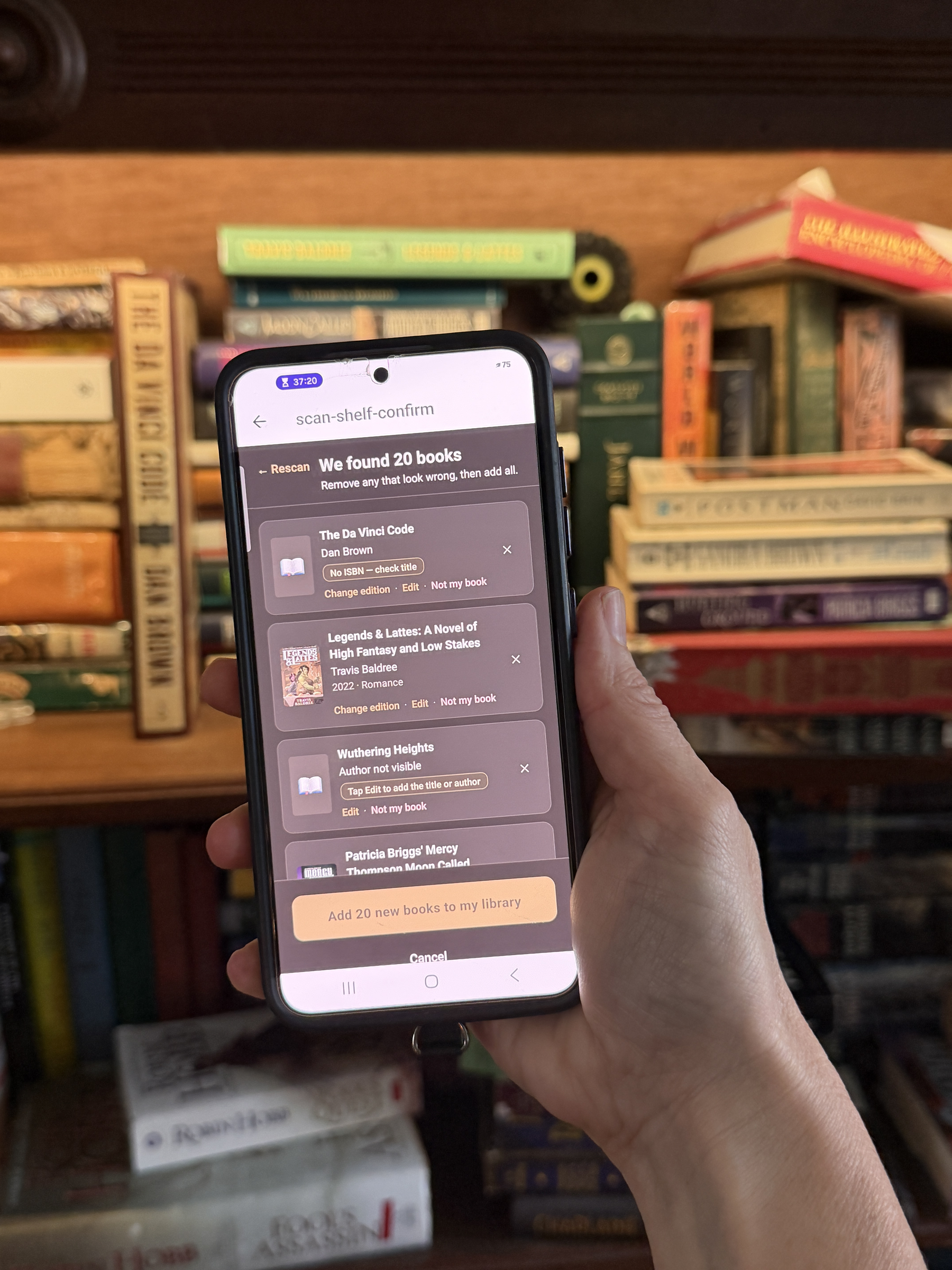
BookHoard is a book-cataloging app built for people whose shelves have outgrown their memory. Point the camera at a barcode, or at a whole shelf, and BookHoard reads the spines and adds every book. From there it does the things collectors actually need: it shows how many books you own in each series and which volumes are missing, estimates the value of the collection against real list prices and exports a PDF inventory for insurance, tracks what you’ve lent and to whom, and warns you before you buy something you already own, even a different edition, while you’re still standing in the bookstore.
What sets it apart is the Banned tab. BookHoard includes a live, continuously updated index of more than 20,000 books that have been banned or challenged in the United States, drawn from more than 36,000 logged bans across 46 states. Readers can browse the index by author or state, and, more to the point, see which of the books on their own shelves are on it. It turns a national story into a personal one.
The ban data comes from Banned Index (bannedindex.org), an independent public-interest database that records every ban with its public source, built and maintained by the same developer.
BookHoard is private by design. There are no ads, no third-party trackers, and nothing is sold. It has no algorithmic feed and no social layer; it is a tool, not a network. Everything you catalog can be exported as CSV or JSON at any time, and Goodreads libraries import in one step. The app points readers to independent bookstores rather than to a single retailer.
Since version 1.3.0 it also reads: the DRM-free EPUBs you already own stay on your device and open without a signal, and hundreds of free classics come with it.
BookHoard is free for up to 100 books. Hoard+ ($4.99 a month or $39.99 a year) adds unlimited books, 50 shelf scans a day and an insurance inventory. It is available on the App Store, with Android in closed testing.
Fact sheet
Ban figures are deliberately approximate here because the database updates continuously. For exact numbers to quote, use bannedindex.org/live — it carries a copy-paste citation line with the access date.
- Name
- BookHoard
- Developer
- Lynda Hartup, solo developer
- Launched
- June 2026
- Platform
- iOS (App Store). Android in closed testing.
- Price
- Free up to 100 books. Hoard+ $4.99/month or $39.99/year.
- Banned index
- More than 20,000 titles and more than 36,000 logged bans across 46 states, updated continuously from Banned Index. Current figures, with a citation line and access date.
- Privacy
- No ads, no ad trackers, no data sold. Full CSV and JSON export.
- App Store
- apps.apple.com/us/app/bookhoard
- Press contact
- support@bookhoardapp.com
Founder
Lynda Hartup builds BookHoard and Banned Index as a solo developer. Prior to this, she collected several copies of her favorite books because she always forgot she owned them.
Assets
Free to use in coverage. No attribution required, though a link is always welcome.
- Everything, as one ZIP 27 MB — icons, 8 screenshots, 2 photos
- App icon 1024×1024 PNG, dark ground
- App icon on parchment for dark page layouts
- Shelf scan, in hand PNG photo
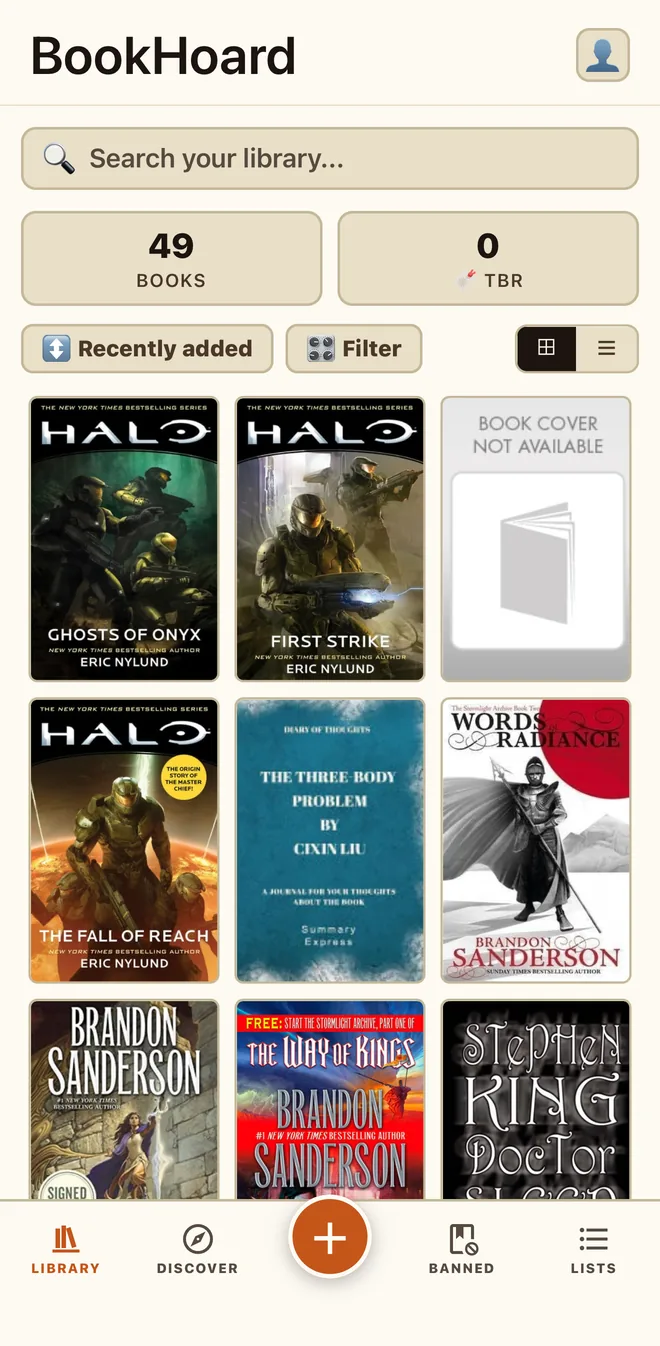
- Library WebP
- Discover WebP
- Banned tab WebP
- Lists WebP
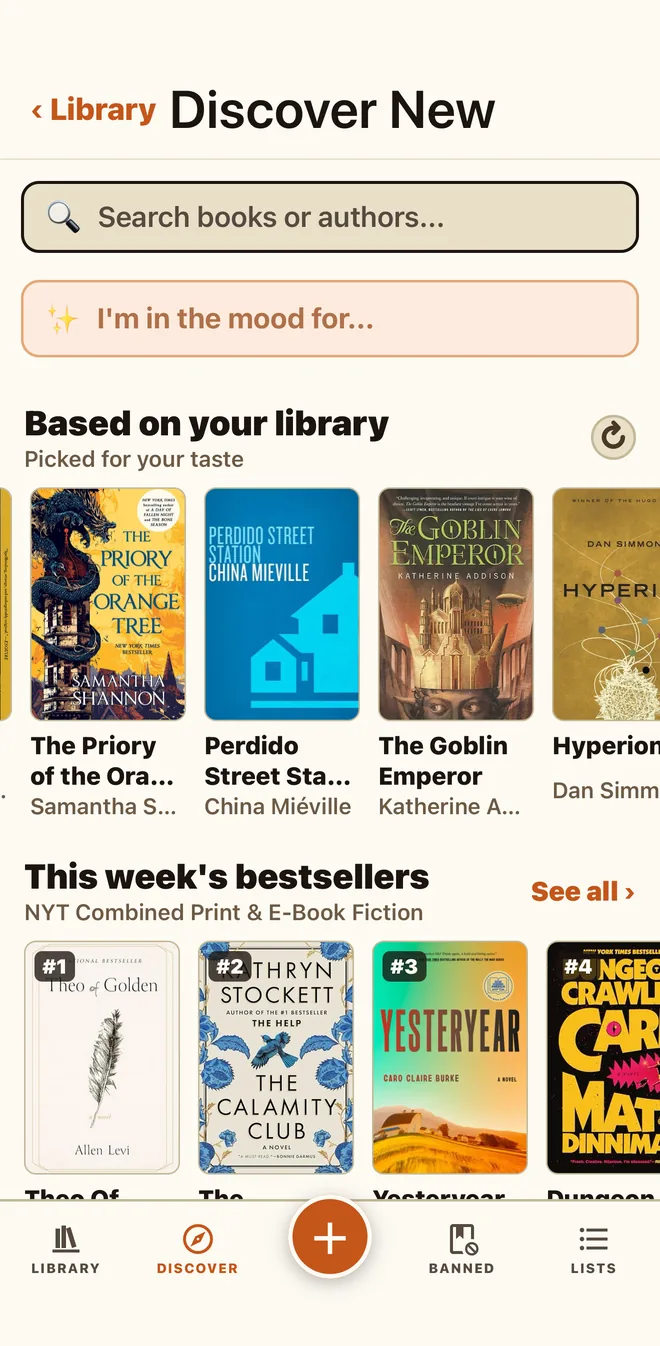
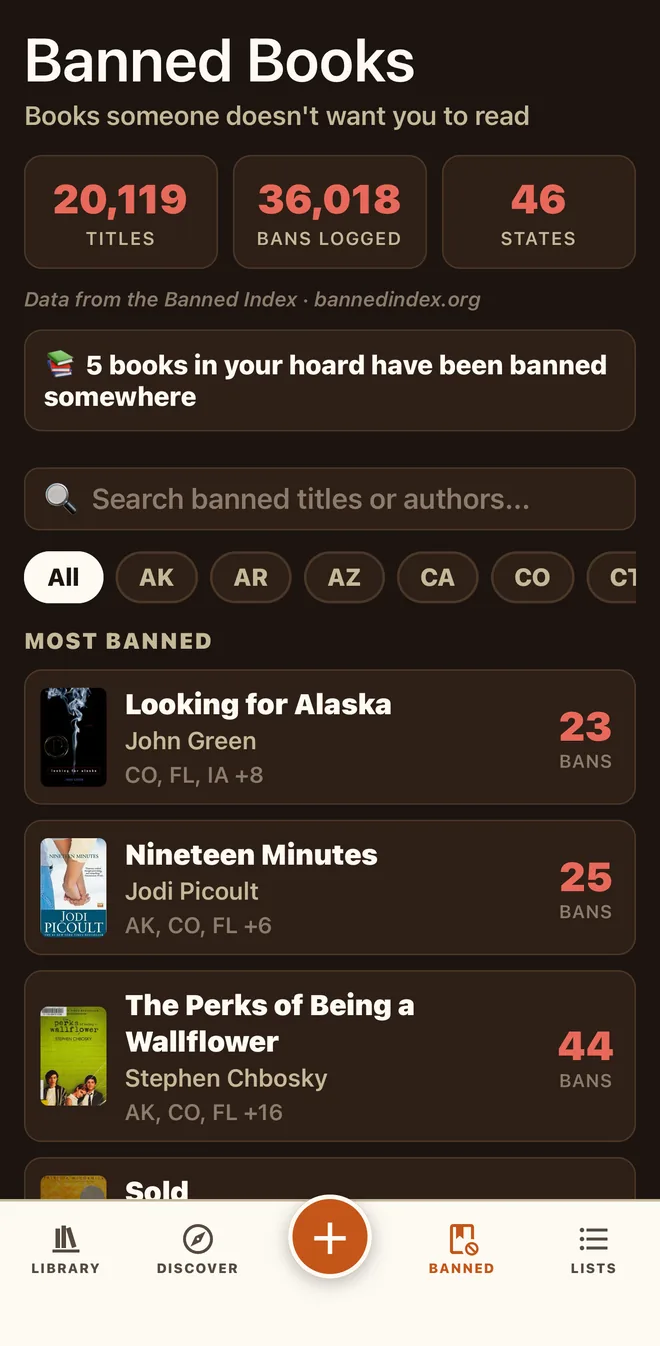
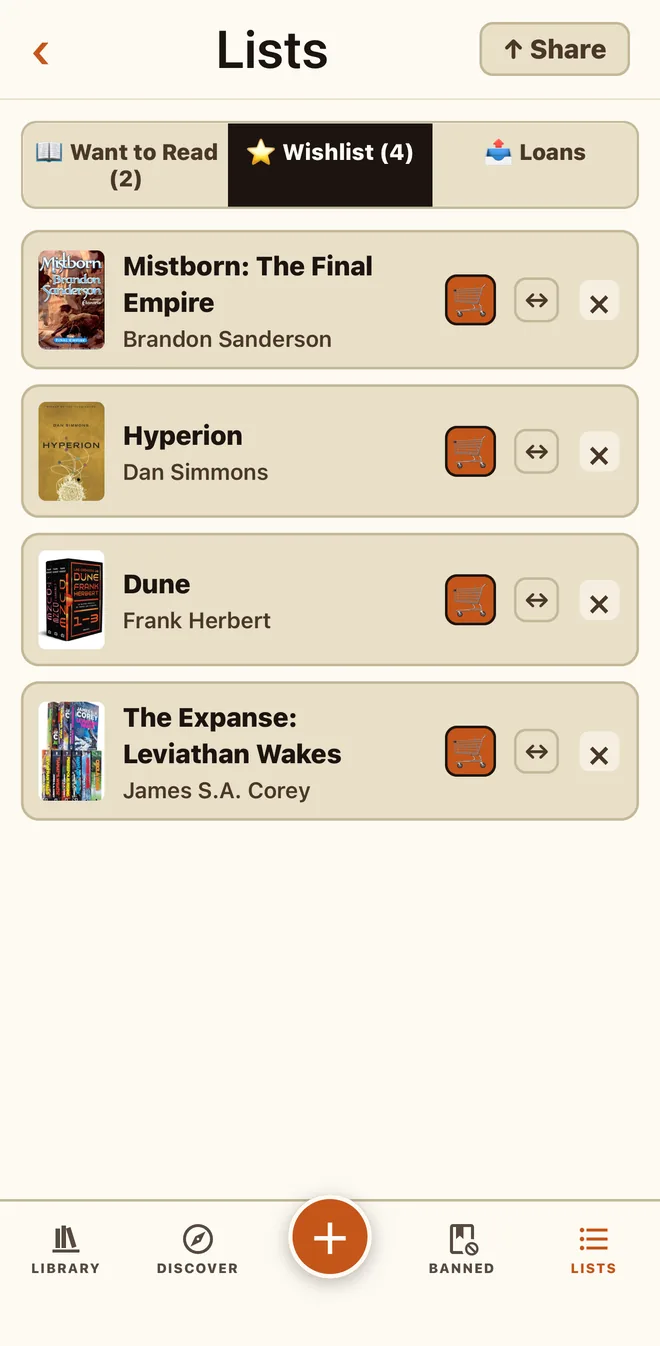
Also available on request: a short screen recording of the Banned tab, and higher-resolution versions of anything here. Just ask.
Using the ban data
The figures above come from Banned Index, an independent database that records every ban alongside its public source — a school board vote, a district list, a court filing. bannedindex.org/live carries current totals, the split by setting, per-state counts and a copy-paste citation line with an access date, so any figure here can be reproduced and dated.
One finding worth knowing, because most coverage misses it: a substantial share of documented bans are in prisons, not schools — and roughly three in ten fall outside schools entirely. The live page has the current split.
“Banned or challenged” means a specific school district or library system removed or restricted a book. It does not mean the book is illegal to buy. Bans are local, and every entry names where.